From Screen to Scene: How Live Streaming Is Building Worlds You Actually Live In
Remember when live streaming basically meant a grainy webcam pointed at someone's face, buffering every thirty seconds? Those days feel ancient now. What's happening across platforms like Twitch, TikTok Live, and a wave of newer competitors isn't just an upgrade in picture quality—it's a full-on reinvention of what a digital destination even means.
We're not just tuning in anymore. We're showing up.
The Shift Nobody Totally Saw Coming
For years, the conversation around live streaming focused on content—who was streaming, what they were playing, how many viewers they pulled. The platform itself was basically a pipe. A delivery mechanism. You clicked a link, you watched, you left.
But somewhere along the way, the pipe started growing rooms.
Platforms began experimenting with persistent spaces—virtual lobbies, shared environments, interactive overlays—that made the experience feel less like watching TV and more like hanging out in a place. Twitch's channel point systems, Discord integrations, and live polls were early hints. But the ambition has gotten considerably bigger since then.
What's emerging now is something closer to a digital neighborhood than a broadcast channel. Audiences aren't just passive viewers; they're residents. They have histories on these platforms, social reputations, digital wardrobes in some cases. They return not just for specific content but because the space itself feels familiar and alive.
Avatars, Identity, and the New Social Layer
One of the most fascinating developments in this evolution is the rise of avatar-based participation. Gaming platforms figured this out first—your character in a game is an extension of you, and people invest real emotional energy (and real money) into how that character looks and moves.
Live streaming is borrowing that playbook hard.
Several platforms are now experimenting with letting viewers represent themselves through customizable avatars during streams, react in spatial ways within virtual environments, and even occupy different "seats" or zones depending on their engagement level or subscription tier. It sounds a little science-fiction-y, but the underlying psychology is pretty straightforward: people engage more deeply when they feel like they're in something rather than just watching it from outside.
For a generation that grew up in Minecraft worlds and Roblox servers, this isn't a weird concept at all. It's just Tuesday.
Shopping, Gaming, Socializing—All at Once
Here's where things get genuinely interesting from a cultural standpoint. The most forward-looking platforms aren't treating shopping, gaming, and socializing as separate features bolted onto a streaming core. They're weaving them into one continuous, uninterrupted experience.
Live commerce—where streamers showcase and sell products in real time—has already exploded in markets like China, and it's gaining serious traction in the US. But the next iteration goes further. Imagine watching a streamer demo a pair of sneakers, clicking to buy them without ever leaving the stream, and then seeing your avatar show up in those same sneakers in the shared virtual space minutes later. That loop—content, commerce, community, identity—is exactly what several platforms are actively building toward.
And gaming is the glue holding a lot of this together. Live streaming and gaming have always been close cousins, but the relationship is deepening. Streams are becoming playable. Viewers vote on outcomes, trigger in-game events, or even drop into the game themselves as guest participants. The boundary between "streamer" and "audience" is getting genuinely porous.
Why Americans Are Ready for This
There's a timing element here that's hard to ignore. The pandemic didn't create the appetite for digital social spaces, but it absolutely accelerated it. Millions of Americans spent significant chunks of 2020 and 2021 discovering that you could feel genuine community through a screen—that watching a streamer with a few thousand other people at the same moment created a kind of shared presence that scratched a real social itch.
That discovery didn't go away when the world reopened. If anything, it created a new baseline expectation. People now know what it feels like to inhabit a digital space with others, and they want more of it, not less.
The demographics back this up. Gen Z and younger millennials—the core of the live streaming audience—are remarkably comfortable toggling between physical and digital social life. For them, a virtual hangout isn't a consolation prize for missing an in-person event. It's a legitimate option on the menu, sometimes the preferred one.
The Platform Arms Race
All of this explains why the competition among platforms right now is so fierce and so interesting. Everyone from Meta (yes, still trying) to newer players like Kick and emerging VR-native platforms is essentially racing to answer the same question: what does the ultimate digital hangout space look like, and how do we get people to live there?
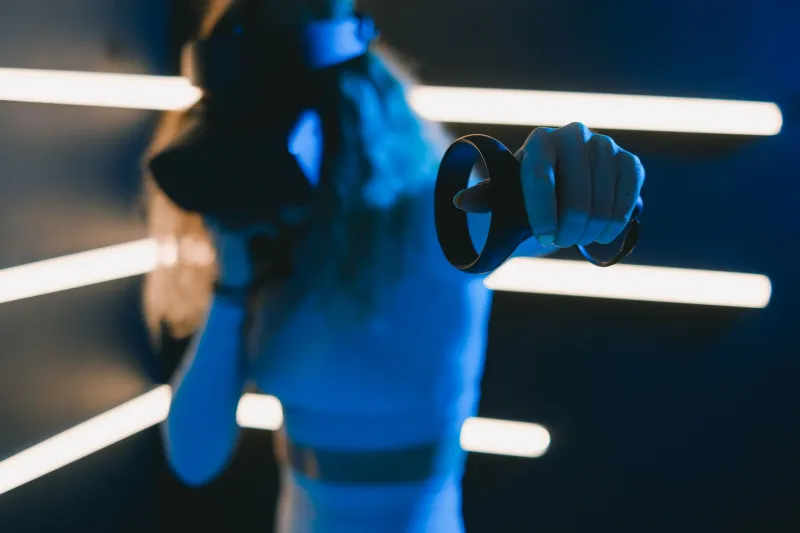
The answers vary pretty wildly. Some platforms are betting big on VR hardware becoming mainstream enough to make fully immersive virtual environments viable. Others are taking a more browser-accessible approach, building rich interactive layers on top of traditional video streams without requiring any special gear. Both strategies have merit; both face real obstacles.
What's clear is that simply hosting a video feed is no longer a competitive position. The platforms that survive the next five years will be the ones that make their spaces feel worth inhabiting—not just worth clicking on.
What This Means for How We Socialize
Zoom out a little and the implications are kind of wild to sit with. Live streaming platforms are quietly positioning themselves as the social infrastructure of the next decade. Not a supplement to real-world socializing, but a genuine parallel track—one with its own geography, culture, economy, and sense of place.
That's a big claim, and it's fair to be skeptical. The metaverse hype cycle of a few years ago left a lot of people burned, and there's a reasonable argument that fully persistent virtual worlds are further off than boosters suggest.
But the direction of travel feels pretty undeniable. Every major platform update, every new feature rollout, every funding round in this space points toward the same destination: a world where you don't just stream the moment—you live inside it.
At PIF Live, we've always believed that real-time energy is something you feel, not just something you watch. What's happening right now across the streaming landscape is proof that a lot of very smart, very well-funded people believe the same thing. The screen isn't just a window anymore. It's a door.
Step through it.