Closer Than Ever: The Strange Psychology of Falling for Someone You've Never Met
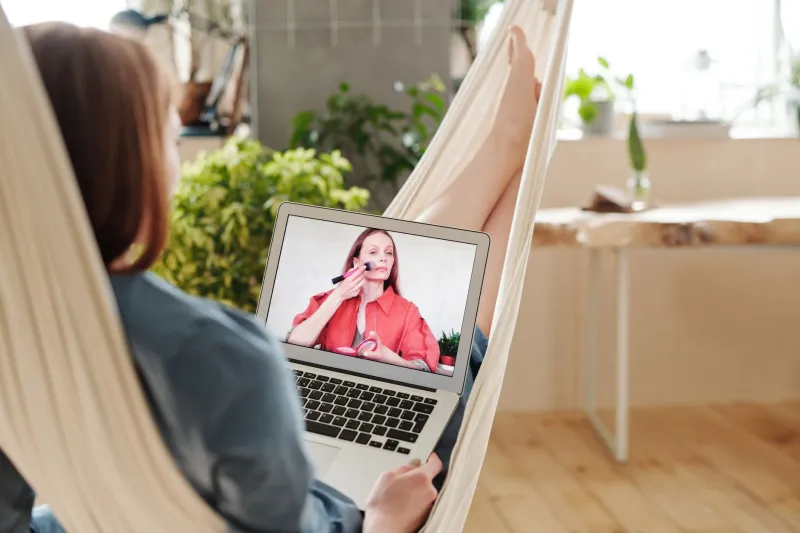
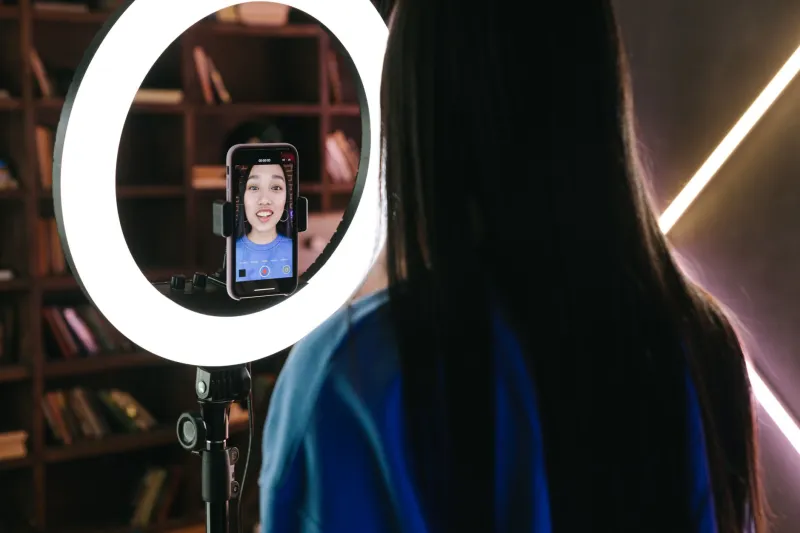
You're watching your favorite streamer. They're mid-run in a survival game, cracking jokes, reading chat, maybe even calling out your username when you drop a comment. For a few hours, it feels like you're just hanging out with a friend. Then the stream ends, and you're alone again — but somehow, you still feel connected.
If that sounds familiar, you're not imagining things. And you're definitely not alone.
Live streaming has quietly become one of the most emotionally powerful media formats in modern entertainment — not because of production budgets or Hollywood scripts, but because of something much more primal: the feeling that someone actually sees you.
What Even Is a Parasocial Relationship?
The term "parasocial" was coined back in 1956 by sociologists Donald Horton and Richard Wohl to describe the one-sided emotional bonds people form with media personalities. Think of how a soap opera fan might feel genuine grief when a beloved character dies, or how a radio listener might feel like a DJ is speaking directly to them.
But here's the thing — what Horton and Wohl were studying was a pale shadow of what's happening on platforms like Twitch, YouTube Live, and Kick today.
"Traditional media creates parasocial relationships by design," says Dr. Jill Balderson, a media psychology researcher at a mid-Atlantic university who studies audience behavior in digital spaces. "The camera angles, the editing, the curated persona — it's all engineered to make you feel close. Live streaming blows all of that up. The streamer fumbles, they react in real time, they respond to you. The brain can barely tell the difference between that and a real conversation."
That distinction matters more than it might seem.
The Live Difference
When you watch a Netflix series, you're consuming something that was finished months — sometimes years — before you ever pressed play. The relationship is entirely one-directional. The performer doesn't know you exist.
Live streaming scrambles that dynamic in ways that are genuinely novel in the history of human media consumption.
When a streamer reads your username out loud, responds to your joke, or even just glances at a donation notification with your name on it, your brain registers something close to social acknowledgment. Neuroscientists call this a "social reward" — the same dopamine-adjacent system that lights up when a real friend texts you back.
"There's a responsiveness to live content that recorded media simply can't replicate," explains behavioral researcher Marcus Trent, who has published work on digital community formation. "Responsiveness is one of the core ingredients of genuine human bonding. When streamers respond to chat, even casually, they're accidentally triggering the same neural pathways that actual friendships activate."
Add in the shared experience of watching live — the collective reactions, the inside jokes that form in real time, the sense that this moment is happening right now for thousands of people simultaneously — and you've got a recipe for community that feels startlingly real.
The Community Side of the Equation
It's easy to frame parasocial relationships as purely individual phenomena — lonely person attaches to internet stranger. But the reality on PIF Live and platforms like it is far more communal.
Streamer communities often function like genuine social ecosystems. Regular viewers recognize each other in chat. Inside jokes accumulate over months of shared streams. Discord servers become places where fans form real friendships that exist entirely independently of the streamer themselves.
"I've been to two weddings where the couple met in a streamer's community," says Kelsey Mora, a 28-year-old content creator from Austin who streams variety gaming content to an audience of around 40,000. "The streamer is almost like a gathering point. People come for the content and stay for each other."
For many viewers — especially those who are geographically isolated, socially anxious, or part of communities that aren't well-represented in mainstream spaces — these digital gathering points provide something genuinely valuable. The parasocial bond with the streamer is often the on-ramp to real social connection with other fans.
That's a meaningful outcome, and it deserves to be taken seriously rather than dismissed as parasocial "delusion."
Where It Gets Complicated
But there's a flip side that researchers are increasingly concerned about, and it would be dishonest to ignore it.
For some viewers, the line between parasocial attachment and genuine friendship becomes genuinely blurry. They may feel that a streamer owes them something — emotional availability, personal disclosure, loyalty — because the relationship feels mutual even when it isn't. When streamers take breaks, move to different platforms, or change their content, some fans react with what can only be described as heartbreak or betrayal.
"The problem isn't that people form these bonds," says Dr. Balderson. "The problem is when the parasocial relationship starts substituting for real-world connection rather than supplementing it. If someone is spending six hours a day in a streamer's chat because it's the only place they feel seen, that's worth paying attention to."
Mental health professionals have started noting parasocial relationships in clinical conversations more frequently as streaming has grown. The concern isn't the attachment itself — humans are wired to attach — but the potential for it to become a crutch that makes building real-world relationships feel unnecessary or even threatening by comparison.
Streamers themselves are navigating this with varying degrees of awareness. Some actively encourage fans to invest in offline relationships. Others, whether intentionally or not, cultivate dependency through language that implies intimacy ("my community," "my family") without the accountability that real relationships require.
Finding the Balance
So where does that leave viewers who feel genuinely close to their favorite streamers? Probably in a more nuanced place than either "this is totally healthy" or "this is a crisis."
Parasocial relationships have always been part of how humans relate to storytellers, performers, and public figures. What live streaming has done is intensify and accelerate that process in ways that are unprecedented. The emotional texture is richer, the perceived reciprocity is higher, and the community dimensions are more robust than anything that came before.
The healthiest version of this — and it absolutely exists — is a fan who genuinely enjoys a streamer's content, feels part of a community, and holds that relationship with some lightness. They know the streamer doesn't really know them. They use the community as a springboard for real connection. They can take a week off from streaming without feeling like they've lost something essential.
The version that warrants more care is one where the streamer's schedule dictates your emotional state, where the parasocial bond is doing work that real relationships should be doing, or where you've started to genuinely believe the connection is mutual in ways it isn't.
Live streaming is an extraordinary medium. The connections it enables — both parasocial and real — are part of what makes it so compelling. But like any powerful thing, it's worth understanding clearly.
Your favorite streamer might feel like a friend. That feeling isn't fake. It's just not the whole picture.