The Spin Cycle Is the Show: Why Laundromats Are Outrating Landmarks
Photo: Robert Ashworth from Bellingham, WA., USA, CC BY 2.0, via Wikimedia Commons
It's 11:40 on a Tuesday night and roughly three thousand people are watching a dryer.
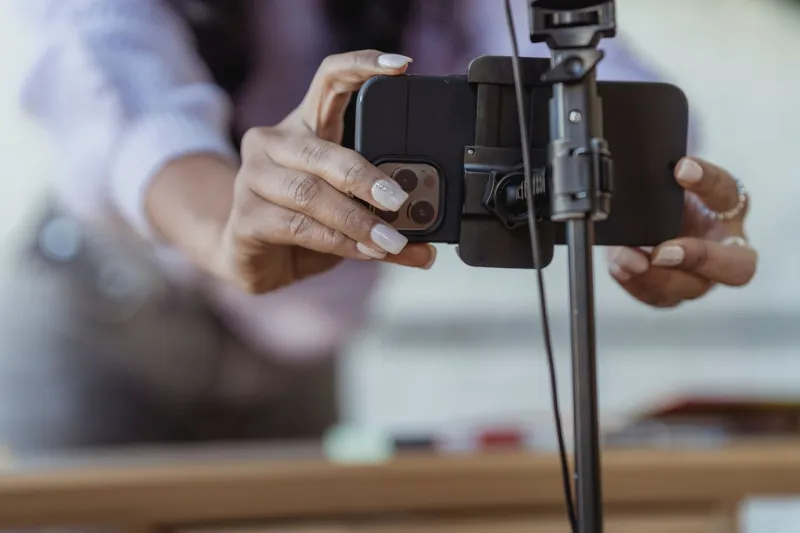
The camera is propped on a folding chair in a strip-mall laundromat somewhere in the Midwest. The streamer is eating vending machine pretzels and narrating nothing in particular. Somebody's socks are going around. The chat is debating whether the machine on the left is about to walk itself across the floor, and a regular is explaining that it's been doing that since spring.
No destination. No production value. No reason for any of it to work — and yet it's more watchable than most of what a travel budget can buy.
The Anti-Destination
IRL streaming built its reputation on movement. City walks through Tokyo, beach sunrises, street food tours, the occasional ill-advised scooter ride. The format's early appeal was obvious: go somewhere the viewer can't.
Somewhere along the way, the audience got bored of somewhere. Part of it is saturation — there are only so many neon alleyways you can look at before they all blur. Part of it is practical, since landmarks and busy public spaces have become hostile to cameras, with permits, security, and annoyed strangers everywhere.
And part of it is simpler than either. A camera pointed at the Eiffel Tower tells you about the Eiffel Tower. A camera pointed at a laundromat tells you about the person holding it.
Why Ordinary Life Holds the Camera
Most live viewing isn't really viewing. It's ambient company — a second screen open while you fold your own clothes, answer email, or procrastinate on going to bed. Landmarks demand attention. Ordinary places don't, which turns out to be their greatest asset.
There's also the low-stakes thing. Nothing catastrophic is going to happen in aisle four. Nothing needs to. The brain gets a small, continuous trickle of mild interest — a stranger's odd purchase, a broken self-checkout, a guy who's clearly been in the parking lot for six hours — and that's enough to keep the tab open.
Then there's the third-place problem. America has fewer and fewer places to just exist without buying something or explaining yourself. A laundromat at midnight is one of the last genuinely unclaimed public rooms left. Watching someone stand in one is a strange, sideways kind of company for people who don't have a laundromat to stand in themselves.
The Business Side of Boring
Small business owners have started noticing. A camera in the corner of a diner, a bodega, a barbershop, or a coin laundry is free attention in a market where attention is the most expensive thing you can buy.
Some of it is organic — a streamer becomes a regular, then the regular becomes the location's unofficial mascot. Some of it is arranged, with owners offering a corner, an outlet, and free coffee in exchange for a shout-out. A few have gone further, mounting their own cameras and running slow, silent streams of the shop floor as a kind of living postcard.
The returns are real but modest. Nobody's building an empire on a laundromat stream. What they get is local recognition, a trickle of curious foot traffic, and a weirdly loyal online fanbase that treats the shop like a character in a show.
A Field Guide to Glamour-Free Locations
If you're wondering what the low-glamour streaming map actually looks like, it's less exotic than it sounds.
- The 24-hour laundromat after 11. The undisputed king. Spin cycles make great background noise and the cast of characters is unbeatable.
- The self-checkout lane. A masterclass in human behavior under mild pressure. The unexpected item in the bagging area is the villain of every episode.
- The car wash on a slow afternoon. Long, meditative, and oddly soothing once the brushes start.
- The grocery aisle at closing time. Empty shelves, tired staff, and the specific melancholy of a supermarket at 10:55 pm.
- The parking garage rooftop. Wind, concrete, and a skyline that looks better from a place nobody's supposed to hang out.
- The gas station coffee counter. The last great American social club, open 24 hours, no membership required.
- The hotel ice machine hallway. Pure liminal space. Nothing happens. Everything could.
The Limits of Low-Stakes
There's a version of this that's warm and generous, and a version that isn't. The line is consent.
Filming strangers in a laundromat for an audience of thousands is not the same as people-watching from a bench. Some people don't want to be background. Some of them have very good reasons. Streamers who handle it well ask first, blur faces when asked, and don't turn a cashier's bad shift into content without a conversation.
The other limit is honesty. A stream that pretends to be spontaneous while quietly staging every encounter is just a sitcom with worse lighting. The reason laundromat streams work is that the dryer really is broken, the pretzels really are stale, and nobody is going anywhere interesting.
That's the whole trick. The camera isn't pointed at a place. It's pointed at the fact that ordinary life is already a show, if someone leaves the lens running long enough to prove it.