Your Couch Just Got Crowded: Inside America's New Co-Watching Obsession
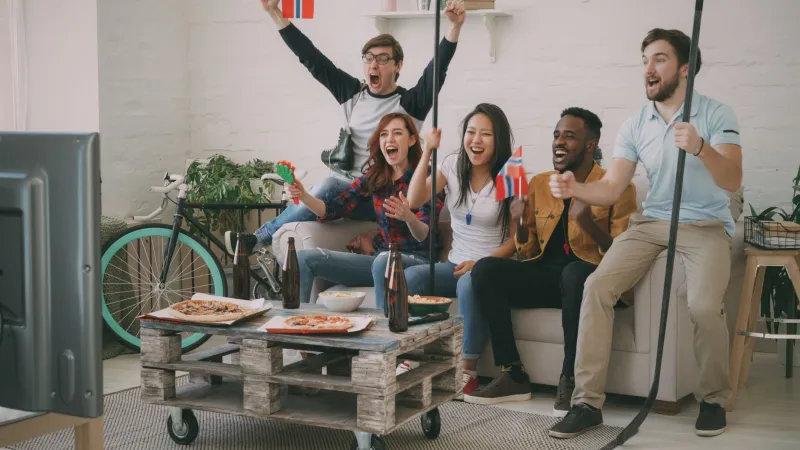
Remember when watching TV was a family affair? The living room, the popcorn, everyone fighting over the remote? That ritual didn't die — it just moved online and multiplied by a factor of a thousand.
Co-watching has quietly become one of the most significant shifts in how Americans consume entertainment. Award shows, NFL playoffs, the premiere of the show everyone's been talking about — fewer people are experiencing these moments solo. Instead, they're logging into watch parties, syncing their streams, and hanging out in chat rooms that feel less like comment sections and more like digital living rooms.
The Living Room That Never Closes
The mechanics are simpler than you'd think. Platforms now let viewers synchronize playback so everyone hits the same frame at the same moment, while a side chat runs the full length of the stream. Some services built this in from the ground up; others grew out of Discord servers, Twitch co-streams, and browser extensions that friends pieced together during the pandemic.
And make no mistake — the pandemic lit the fuse. When lockdowns hit, watching the season finale of your favorite show with your group chat wasn't a novelty, it was a lifeline. What's remarkable is that the habit stuck around long after the world reopened.
"I've never met most of these people," says one regular who hosts weekly watch parties for a reality competition show. "But I've spent every Monday night with them for three years. That's more than I see some of my college friends."
There Are Rules, Apparently
Spend enough time in these spaces and you'll learn that co-watching culture has developed its own etiquette — an unwritten constitution enforced by mods and peer pressure alike:
- No spoilers in the lobby. If you've seen the episode, you keep your mouth shut until the credits roll.
- Mute your reactions during key moments. Nobody wants the twist ruined by someone typing "OMG WAIT" forty seconds early.
- The chat is not your personal stage. Pithy one-liners are currency; walls of text are spam.
- Regulars get status. Show up consistently, contribute good energy, and you'll earn a role, an emoji, maybe even hosting privileges.
It sounds silly until you realize these norms are doing exactly what neighborhood bars and bowling leagues did for previous generations — turning strangers into a community with shared rituals.
Friendships With No Address
Sociologists have a term for the bonds formed in these spaces: parasocial when it's one-directional, but co-watching communities often go further. People exchange birthday wishes, rally around a member going through a rough patch, plan meetups at conventions. The shared experience of reacting in real time — the collective gasp, the flood of crying-laughing emojis — creates something psychologists call emotional synchrony, and it's a powerful bonding agent.
There's a reason stadiums feel electric and watching the same game alone feels flat. Humans are wired to feel things together. Co-watching platforms are essentially selling that electricity by the gigabyte.
What This Means for Old-School TV
Broadcasters are paying attention, even if nervously. The second screen stopped being a distraction — it became the main event, with the show itself as the backdrop. Networks now design programming with chat-worthy moments baked in, knowing that a plot twist that gets 50,000 people typing at once is worth more than a critic's rave.
The smart money says the future of "TV" looks less like a broadcast and more like a venue. The content is the band; the chat is the crowd. And the crowd, increasingly, is the reason people show up at all.
So the next time you press play on the big premiere, consider this: somewhere out there, ten thousand people are pressing play with you. The couch just got a whole lot bigger.