Your Brain on Live: The Wild Science That Makes Real-Time Entertainment Unforgettable
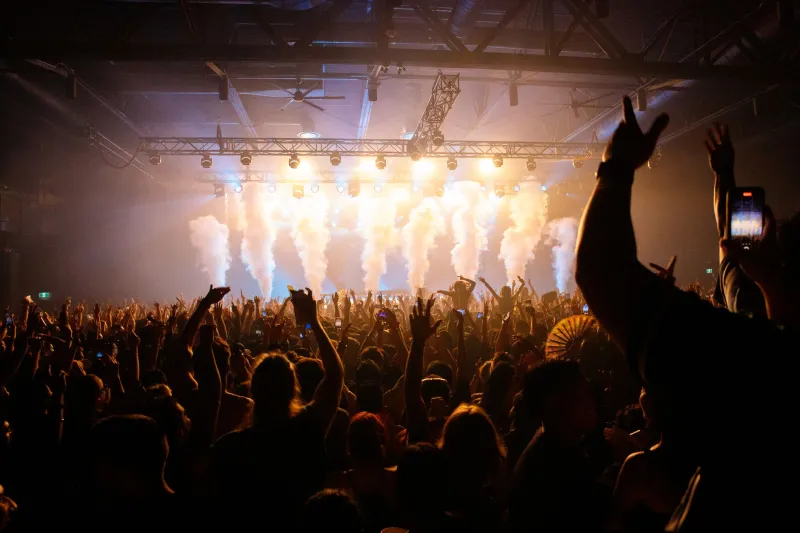
There's a moment — you know the one. The lights drop at a show, or the stream kicks off and the chat explodes with thousands of people typing the same thing at the same time. Your heart rate ticks up. Your palms might even sweat a little. Something in your body knows this is different from hitting play on a recorded video.
That feeling isn't just vibes. It's biology. And once you understand what's actually happening inside your head during a live performance or real-time stream, you'll never think about entertainment the same way again.
Dopamine: The Live Event Drug Your Brain Is Already Hooked On
Let's start with the obvious suspect: dopamine. Most people know it as the "feel-good" chemical, but that's a bit of an oversimplification. Dopamine isn't really about pleasure — it's about anticipation. It's the neurological reward your brain dishes out when something unpredictable might happen.
And live entertainment? It's basically a dopamine slot machine.
Dr. Mara Hendricks, a cognitive neuroscientist whose research focuses on audience behavior, puts it plainly: "Pre-recorded content gives your brain a sense of safety. You can pause it, rewind it, look it up. But live events strip that away. Your nervous system reads that uncertainty as high-stakes, and it responds accordingly — flooding you with the neurochemicals that make you feel alive."
This is why a live stream of a sporting event hits different from watching the highlights the next morning, even if you somehow avoided all the spoilers. The outcome being genuinely unknown in the moment changes how your brain processes every second of it. The stakes feel real because, to your nervous system, they are.
Mirror Neurons: Why You Feel What the Performer Feels
Here's where it gets even wilder. Buried inside your brain is a network of cells called mirror neurons — and their whole job is to simulate the experiences of people you're watching. When a guitarist absolutely shreds a solo, your motor cortex partially mimics the movement. When a comedian's face contorts with exaggerated disbelief, your facial muscles make micro-movements in response.
You're not just watching. You're participating, neurologically speaking.
This effect is amplified during live performances because the performer is responding to the audience in real time. It creates a feedback loop — the crowd's energy shapes the artist's energy, which shapes the crowd's, and so on. Researchers at Princeton University have described this as "neural coupling," where the brainwaves of a speaker and listener can actually synchronize during engaged communication.
Streaming platforms are increasingly tapping into this. Features like live chat, real-time reactions, and co-watching tools aren't just bells and whistles — they're deliberately engineered to recreate that feedback loop for digital audiences. "When you see ten thousand people react to the same moment simultaneously, your brain treats that as social proof that something significant is happening," says Jordan Avila, a UX researcher who's worked with several major streaming services. "It hijacks the same circuits that fire in a packed arena."
The Unpredictability Factor: Why Mistakes Make Magic
One of the most counterintuitive findings in live entertainment research is that audiences actually respond more emotionally to imperfect live performances than to technically flawless recordings.
A voice crack during a ballad. A comedian who stumbles over a setup and recovers. An athlete who nearly falls and then pulls off something impossible. These moments of human vulnerability activate a part of the brain associated with empathy and social bonding. We root for people. We feel with them.
Recorded content, by its very nature, has already been edited and optimized. The rough edges are gone. And while that can make for a technically superior product, it also strips away the element of genuine human risk — which is exactly what our brains are wired to find compelling.
This is a huge part of why live streaming has exploded in the US over the past several years. Platforms built around real-time content aren't just offering convenience — they're offering something fundamentally different from on-demand video. They're offering presence.
The Shared Experience Effect: Why Watching Together Changes Everything
Humans are social animals. We didn't evolve to consume entertainment alone in the dark — we gathered around fires, told stories in groups, and experienced music and ritual as communities. That ancient wiring doesn't disappear just because we're staring at a screen.
Research from University of California, Berkeley has shown that people report higher enjoyment of the same piece of media when they believe others are watching it simultaneously — even if they can't see or interact with those other viewers at all. Just the knowledge of shared experience changes the chemical cocktail in your brain.
Live streaming, at its best, captures this completely. Whether it's a massive festival broadcast, a real-time gaming tournament, or an intimate live performance from an independent artist, the fact that thousands or millions of people are experiencing the same moment together creates a kind of collective energy that recorded content simply cannot replicate.
"There's a reason people still pay hundreds of dollars for concert tickets when they could just watch the same artist on Spotify," says entertainment psychologist Dr. Keisha Townsend. "The live experience is neurologically irreplaceable. And what we're seeing now is streaming technology getting sophisticated enough to capture at least some of that magic in digital spaces."
What This Means for the Future of How We Watch
The live streaming boom isn't a trend. It's a correction — a return to the kind of entertainment our brains actually evolved to crave. Real time. Shared. Unpredictable. Human.
Platforms that understand this aren't just competing on content libraries or streaming quality. They're competing on energy — on how effectively they can make you feel like you're in the room even when you're on your couch in Cleveland or Austin or anywhere else.
The science is clear: your body doesn't just prefer live entertainment. On some level, it needs it. That electric feeling when the stream goes live and the chat lights up? That's not hype. That's your nervous system doing exactly what it was built to do.
And honestly? That's a pretty beautiful thing.