Always On, Always Drained: The Hidden Cost of Living Your Life Live
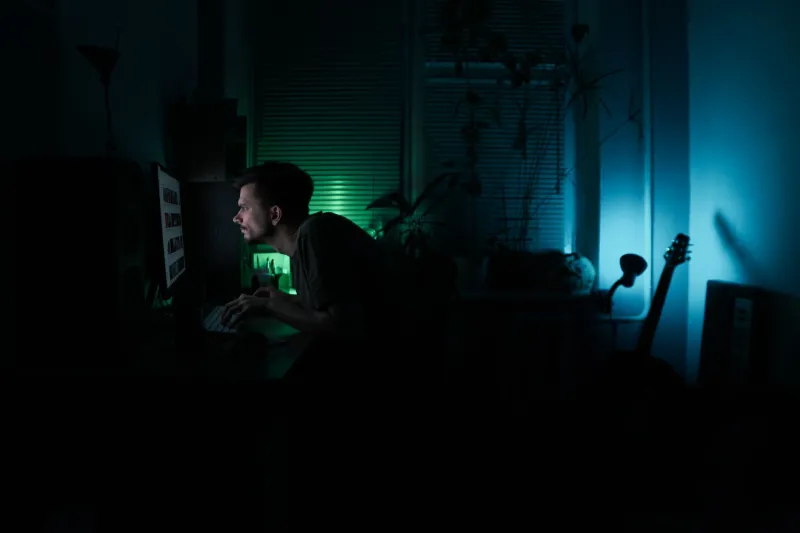
Marcos had been streaming six days a week for two and a half years when he realized he couldn't remember the last time he'd watched a movie just to watch it — not to analyze it, not to think about how it would play in a stream, not to file it away as potential content. He'd stopped having experiences that weren't, in some part, for the audience.
"I was standing in line at a coffee shop," he told us, "and I caught myself thinking about how I'd describe this moment on stream. I wasn't even live. I was just — performing. All the time. In my own head."
He took a month off. His subscriber count dropped. His income took a hit. He came back slower, with shorter streams and two days off per week built into his schedule like appointments he couldn't cancel. A year later, he says it's the best professional decision he's ever made.
Marcos isn't alone. Across the streaming world, a quiet reckoning is underway.
The Grind Culture That Built an Industry
Live streaming's hustle mythology runs deep. The early success stories — the streamers who went from bedroom setups to six-figure incomes — almost universally involved grinding daily streams, sometimes for years, before the numbers moved. That narrative got internalized across the community as a kind of gospel: consistency is everything, missing a day means losing momentum, and the audience you don't serve today is the audience someone else will capture tomorrow.
Platform recommendation algorithms reinforced this. Twitch and YouTube Live both historically rewarded consistent streaming schedules with better discoverability. Stream daily and you're training both the algorithm and your audience to expect you. Miss days and you fall out of the habit loops that keep viewers coming back.
For a while, this worked. But the streamers who came up in the last five years entered a landscape that was already saturated, already demanding, and already built on the expectation that creators would treat their mental and physical health as acceptable collateral damage in the pursuit of growth.
What the Research Actually Says
The psychological research on live streaming burnout is still catching up to the scale of the problem, but what exists is striking.
Studies on emotional labor — the work of managing and performing emotions as part of a job — consistently find that sustained performance of positivity, enthusiasm, or high-energy engagement depletes cognitive and emotional resources in ways that ordinary work fatigue doesn't. Streamers aren't just working long hours; they're performing for extended periods while simultaneously monitoring chat, making real-time decisions, and managing the emotional needs of an audience that may number in the thousands.
Dr. Rachel Kim, a clinical psychologist who has worked with several full-time content creators, describes it this way: "The nervous system doesn't distinguish between genuine emotion and performed emotion after a while. You burn through the same reserves either way. And when you're doing it for four, six, eight hours a day with no real off switch, the depletion becomes structural."
There's also the parasocial dimension. Streamers who build close-knit communities often describe feeling genuinely responsible for their viewers' emotional wellbeing — being the reason someone's day got better, showing up for people who have no one else to watch. That's a meaningful thing. It's also an enormous psychological weight to carry every single day.
The Voices of People Who Stepped Back
We spoke with several streamers who had pulled back from aggressive streaming schedules. Their experiences varied, but certain themes kept surfacing.
Sleep deprivation was almost universal. Late-night streaming is common because evening hours in US time zones tend to produce the highest concurrent viewership. Many streamers described running on five hours of sleep or less for months at a time, convincing themselves that the growth they were seeing justified the cost.
Physical health deteriorated in predictable ways — repetitive strain injuries from extended keyboard and mouse use, poor diet from never leaving the streaming setup during peak hours, and the sedentary reality of sitting in a chair for most of your waking life.
But the mental health dimension was consistently described as the hardest part. One streamer, who had built an audience of roughly 15,000 before taking a three-month break, described a period where she was logging on to stream while actively crying off camera, pulling herself together for the intro, and then falling apart again the moment the stream ended.
"The audience didn't know," she said. "I got really good at performing okay. And that made it worse, honestly — because I was putting in the work of seeming fine while feeling anything but."
The Platform Problem
It's worth naming something directly: the platforms that host live streaming content benefit from creator output without bearing the cost of creator burnout. There are no sick days, no employee assistance programs, no HR department to flag someone who's clearly struggling. The relationship is entirely transactional — the platform takes a revenue cut, and what happens to the person generating that revenue is largely their own problem.
Some platforms have made gestures toward creator wellness — Twitch has published guidance on sustainable streaming, and YouTube has created resources around mental health for creators. But structural incentives haven't changed. The algorithm still rewards consistency. The revenue model still depends on volume. The message between the lines is still: show up or fall behind.
What Sustainable Actually Looks Like
The streamers who seem to have figured this out — and there are more of them now than there used to be — have stopped optimizing exclusively for growth and started optimizing for longevity.
That looks different for everyone. For some, it's a hard cap on streaming hours per week. For others, it's building a content calendar that includes mandatory rest days treated as non-negotiable. Some have shifted to shorter, higher-energy streams instead of marathon sessions, finding that two focused hours outperform six exhausted ones in terms of both viewer experience and personal sustainability.
The mental health conversation in streaming communities has also opened up in ways that feel genuinely new. Streamers talking openly about taking breaks, about therapy, about the difficulty of separating their identity from their channel — these conversations used to be career risks. Increasingly, they're the content that resonates most deeply.
"I told my chat I was burning out," Marcos said. "I thought I'd lose half of them. Instead, it was the most engaged my community had ever been. People showed up for me, not just the entertainment. That changed how I understood what I'd actually built."
The always-on culture isn't going anywhere overnight. The pressure to stream constantly is real, and for newer creators without financial cushions, taking time off carries genuine risk. But the industry is slowly, haltingly, starting to acknowledge what it costs.
Live streaming is built on presence — on the electric charge of someone being genuinely, fully there in real time. You can't manufacture that when you're running on empty. The energy has to come from somewhere. And protecting the person generating it isn't just good for them — it's what keeps the whole thing worth watching.