Add to Cart, Live: The Streamers Turning a Tuesday Night Into a Storefront

Photo: Unknown authorUnknown author, Public domain, via Wikimedia Commons
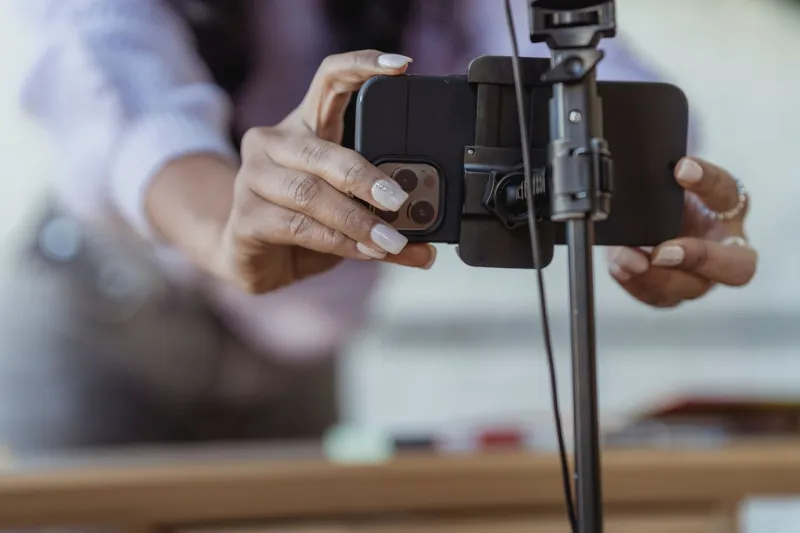
The set doesn't look like a studio. It's a folding table in a spare bedroom outside Columbus, a ring light, a clothing rack, and a phone clamped to a tripod. The host flips a vintage denim jacket inside out, reads off the pit-to-pit measurement, and drops the number that actually matters: 40 percent off for the next ninety seconds. The chat fills with variations of the word mine. Somebody buys it before the timer runs out. Then the whole thing resets with a new item, a new countdown, and a fresh shot of adrenaline.
This is American live commerce in 2026, and it looks almost nothing like the channel-flipping retail your parents left on in the background. The bones are the same — a person, a product, a pitch, a price — but the wiring is completely different. The audience talks back. The host answers. The checkout button sits one thumb-tap away from the joke that made someone laugh.
The Pitch Is the Programming
The mistake people make is calling this home shopping with better lighting. It's closer to the reverse. The entertainment came first, and the storefront grew on top of it.
Most of the sellers making real money on live platforms spent months or years building a room before they ever put a price tag on screen. They streamed while folding laundry, unboxed thrift hauls for nobody, argued with their own chat about pizza toppings. By the time they started selling, the audience wasn't tuning in for the discount. They were tuning in for the person, and the discount was just a nice excuse to hang around a little longer.
That's the difference between a commercial and a hangout. QVC's grandchildren didn't inherit the studio. They inherited the parasocial relationship and pointed it at a shopping cart.
Why a Live Pitch Beats a Product Page
A product page tells you what a thing is. A live seller tells you what it's like to own it, and does it while answering the exact question you were about to type.
That real-time loop does a lot of quiet heavy lifting. The host can show the scuff on the secondhand boot instead of burying it in the fourth photo. They can hold two sizes next to each other and admit which one runs small. They can field the skeptic in chat who says the fabric looks thin and respond before the doubt spreads to forty other people.
Scarcity does the rest. A countdown on a screen is not subtle, and it isn't supposed to be. Buying becomes a small, thrilling decision instead of an errand you keep postponing.
The QVC Problem
Legacy TV retail isn't dead, but it's been demoted. For decades it owned a genuinely weird and profitable corner of American media: appointment viewing that happened to ship you a blender. The format's weakness was always the same as its strength — it was a broadcast. One voice, millions of rooms, no way to talk back except by phone.
QVC Group has spent the last several years pushing its own streaming shopping apps and social selling experiments, and it's not alone. Cable networks with shopping DNA have been racing to build the two-way version of a business they invented. The awkward part is that the new format rewards exactly what a broadcast can't fake: a host who feels like a friend, a chat that shapes the segment in real time, and a catalog small enough that the person on camera actually knows it.
Selling a hundred things beautifully is a television skill. Selling twelve things intimately is a streaming one.
The Always-On Tax
Here's the part the highlight reels skip. Live selling is exhausting in a specific, grinding way. The camera doesn't just need you to be charming — it needs you to be charming on schedule, four nights a week, with a countdown clock running and a chat that can turn on you the second the energy dips.
Creators who go all-in on commerce often discover that the thing they loved doing has become a job with worse hours than the job they left. Inventory has to be sourced, photographed, measured, stored, and shipped. Returns land in the living room. Customer service questions arrive at midnight on a platform where the audience expects an answer in the chat, not an email in three business days.
And audiences get tired. A stream that's 90 percent selling and 10 percent hanging out slowly stops being a hangout. The viewers who stay are the ones who came to buy, which means the room gets smaller, sharper, and harder to keep warm.
What Actually Converts
Strip away the gimmicks and the sellers who last tend to do a handful of unglamorous things well.
They show the flaw before anyone asks. They answer the same sizing question eight times without sighing. They refuse to oversell a dud, because one bad recommendation costs more trust than one good sale earns. They keep the dead air short — no three-minute silence while someone hunts for a tape measure. They build recurring segments the audience can anticipate, the way a good show has a cold open and a signature bit.
Most of all, they treat the sale as a byproduct of the room rather than the reason for it. That sounds soft. It's actually the hardest discipline in the format.
Where This Goes
Live commerce in the US is still unglamorous infrastructure-wise — payments, shipping, and returns are stitched together from three or four different tools, and the seams show. The sellers winning right now are the ones who treat that mess as their own problem instead of the buyer's.
The bigger shift is cultural. A generation that grew up watching other people play video games for hours has no resistance to watching somebody try on jackets for an hour. The transaction isn't an interruption in the entertainment anymore. It's just the next thing that happens in the stream — the moment you feel, right before the cart updates.